Harbin Travel Guide 2026: Ice City, Russian Churches and How to Survive -30°C
I'll be honest: I wasn't sure what to expect from Harbin. Every travel video I'd seen made it look like a frozen theme park — spectacular, yes, but also the kind of place you visit for one day and then rush back to somewhere warmer. I ended up staying four days and didn't want to leave. Harbin is weird in the best possible way. It's a Russian city that somehow ended up in northeast China, with onion-domed churches, cobblestone streets and a winter carnival that feels like something from a fairy tale. The cold is real — I'll get to that — but so is the warmth of the people, the food and the sheer strangeness of seeing European architecture on a Chinese street at -25°C.
This guide is based on two separate trips, one in January (peak ice season) and one in early March (quieter, still freezing). I've tried to include everything a foreign visitor actually needs to know, including the stuff the brochures don't mention.
Ice and Snow World: Worth the Hype?
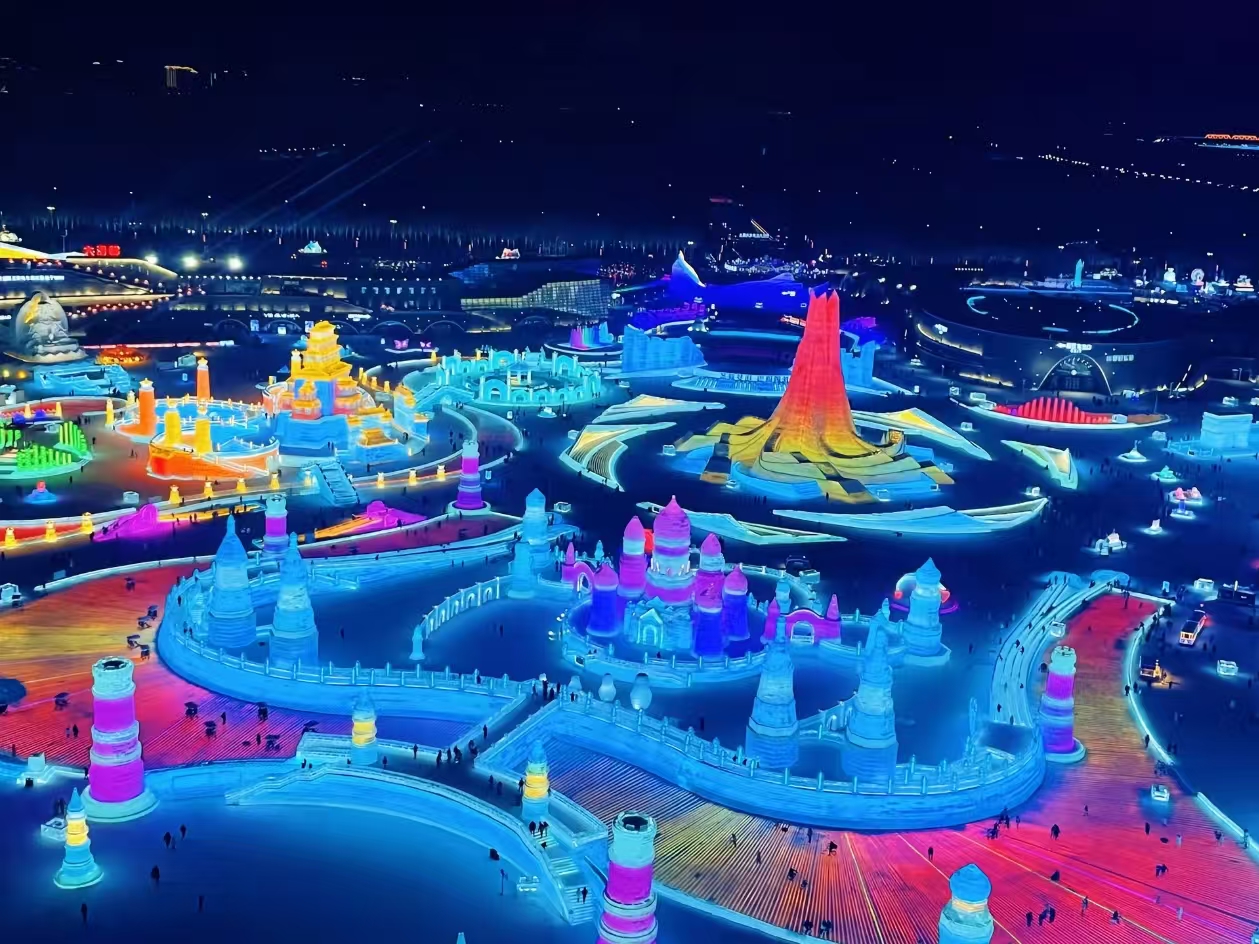
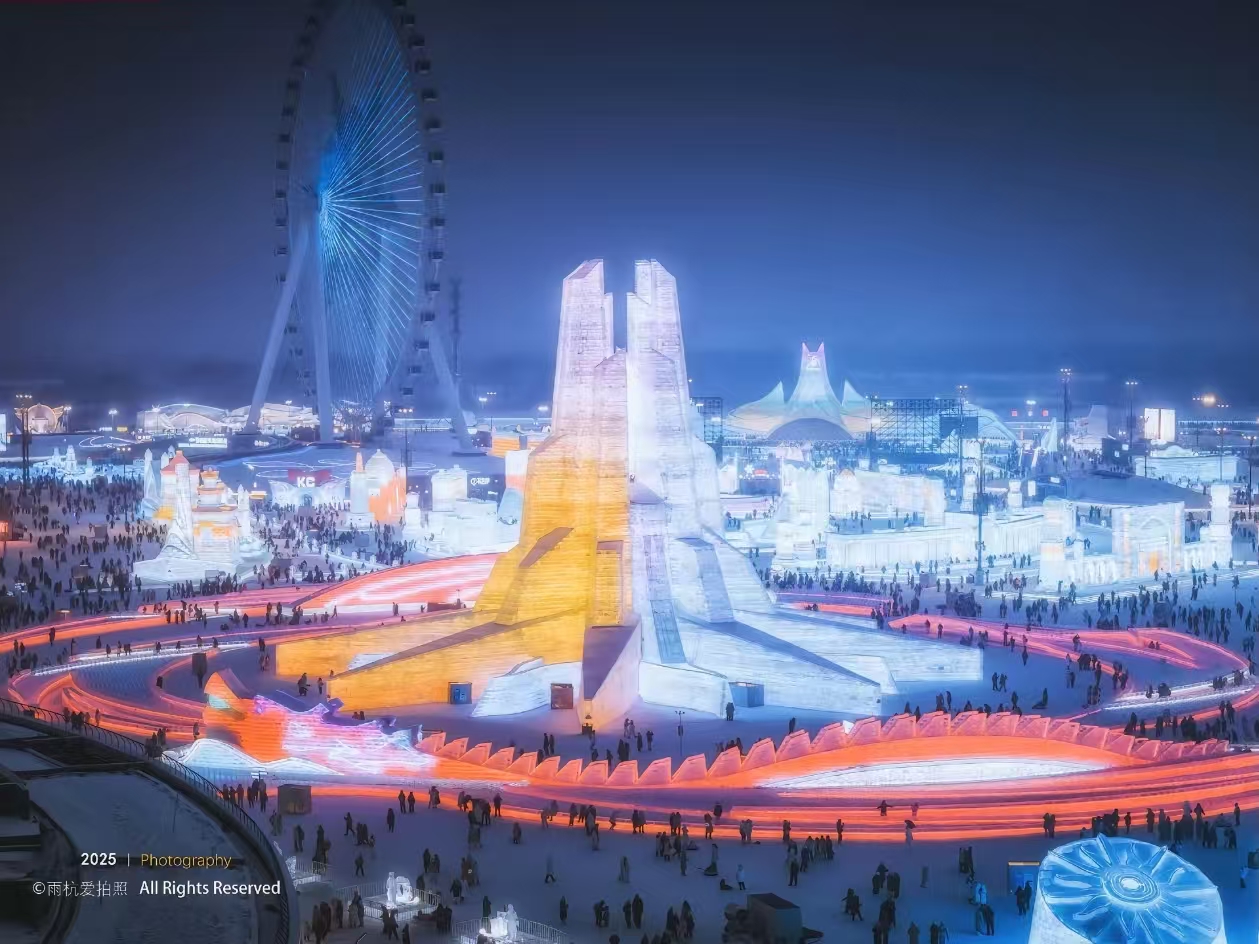
The Ice and Snow World at night — this is what you're here for. The scale is overwhelming and the colors are impossible to capture well on a phone.
Let me be honest with you. I had mixed feelings about this place before I went. I thought it might be a tourist trap. But standing in front of those giant ice castles at night, with the lights changing from blue to purple to pink — I have to admit, it's genuinely impressive. Every winter, builders take millions of cubic meters of ice from the Songhua River and construct an entire city of ice. It's not just a few sculptures. It's a whole city.
The giant ice slide has a queue of 1-2 hours during peak times. I waited 90 minutes and it was a 20-second ride. Was it worth it? Honestly... yes, but barely. If you can't afford the time, the smaller slides are nearly as fun with a fraction of the wait. My advice: go at 4pm, just as the lights turn on. You'll get 1-2 hours of daylight plus 3-4 hours of neon. Leave by 8pm — your hands will thank you. I made the mistake of staying 6 hours once, and my fingers were so numb I couldn't use my phone camera for the last hour.
Don't stay for more than 4 hours. Even with full winter gear, the cold will affect your judgment and body. 3-4 hours is the sweet spot. Book tickets on Trip.com in advance — 298 RMB. The official price is fair, but touts outside will try to sell you overpriced "VIP" passes that don't exist.
St. Sophia Cathedral: The Real Thing
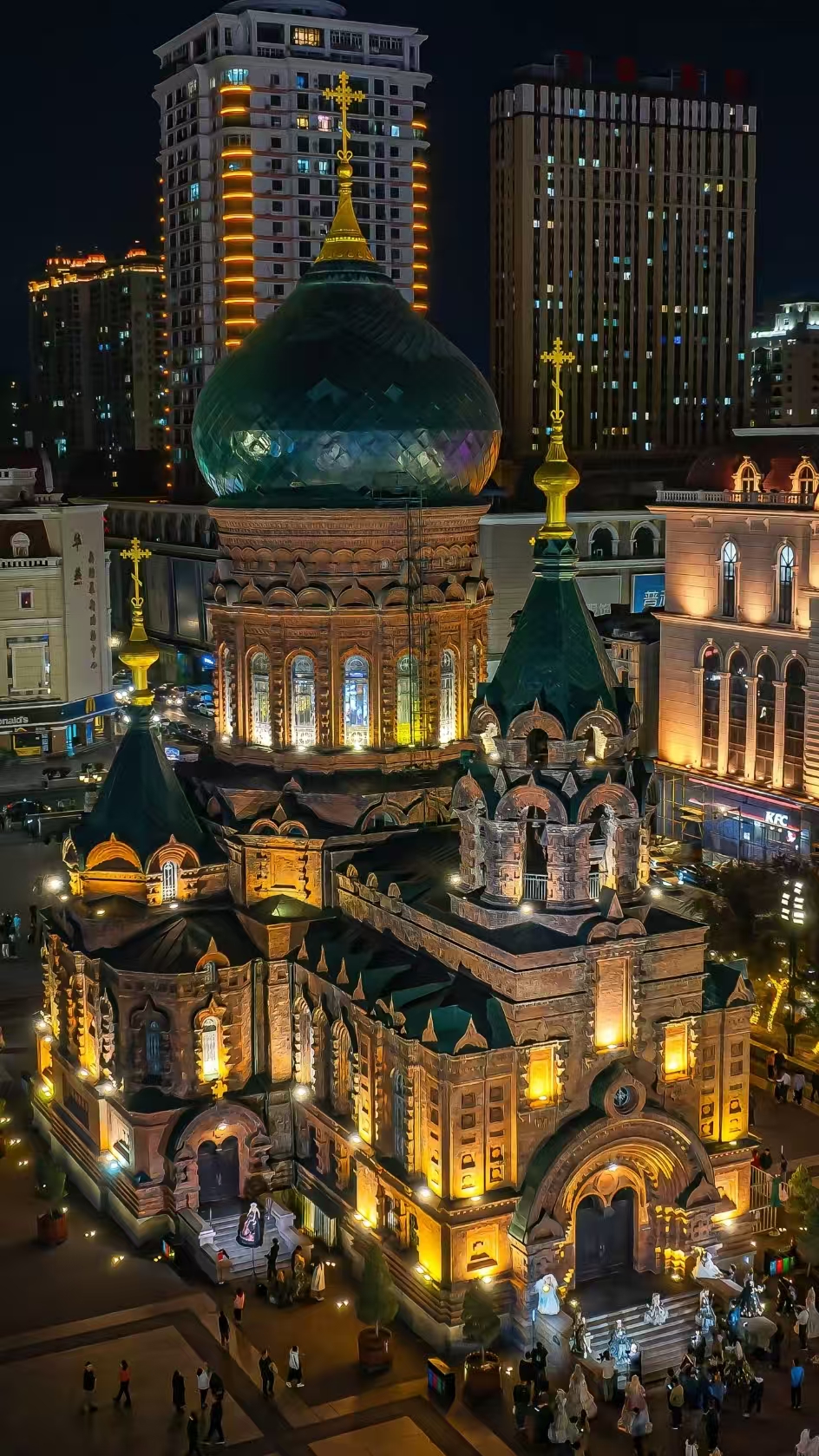
St. Sophia at night — a Russian Orthodox church built in 1907, now a museum.
This is the building you've seen in every Harbin photo. And honestly, it's even better in person. The green onion dome, the red brick exterior, the golden floodlights at night — it looks like something you'd see in St. Petersburg, not northeast China. The building is a museum now. You can go inside for 20 RMB, but the interior has been stripped of most of its original fittings. I'd say spend your money on the exterior view instead, unless you're a serious architecture buff.
There's a square in front where locals feed pigeons, which makes for great photos. Go early (before 9am) to avoid the tour groups. By 10am you'll be competing for space with a dozen busloads of Chinese tourists. The morning light hits the green dome beautifully, but the real magic is at night when it's floodlit from below.
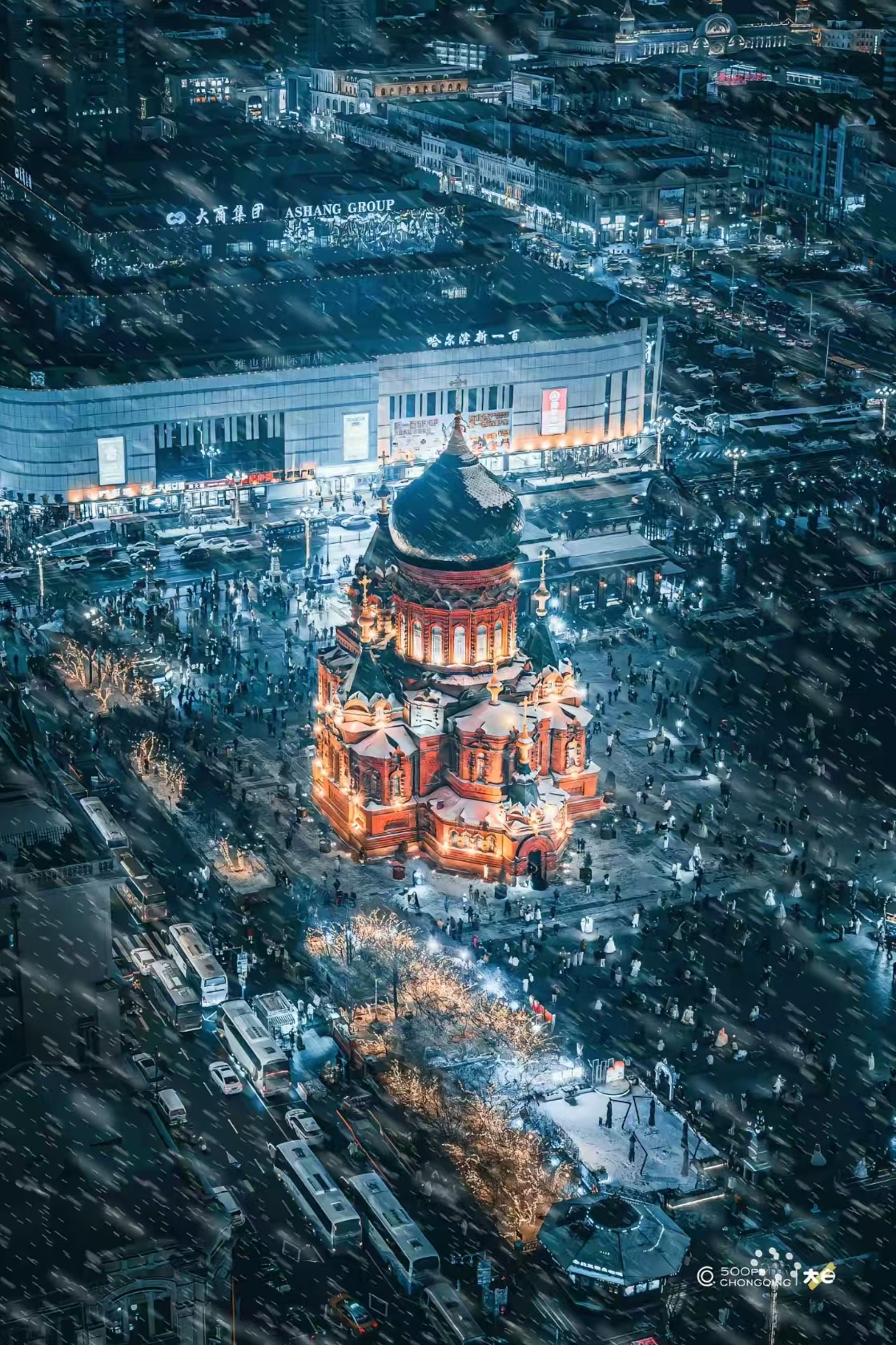
A snowy aerial view of St. Sophia — the contrast between red brick and white snow is breathtaking.
Central Street: Overpriced but Unavoidable
Central Street (Zhongyang Dajie) is Harbin's main tourist drag, a mile-long pedestrian avenue lined with early 20th-century Russian buildings. It's beautiful to walk, but the restaurants and shops are overpriced and the crowds can be exhausting. Walk it once, take your photos, then move on.
The exceptions: the Madiel ice cream is the real deal — 5 RMB per stick, and it somehow tastes better at -20°C than it does at room temperature. And the Huamei Western Restaurant (No. 112 Central Street) is one of China's four original Western restaurants, dating back to 1925. The Russian-style borscht and beef stew are excellent, though the service is slow and the prices are stiff. It's still worth the splurge.
Songhua River Bridge
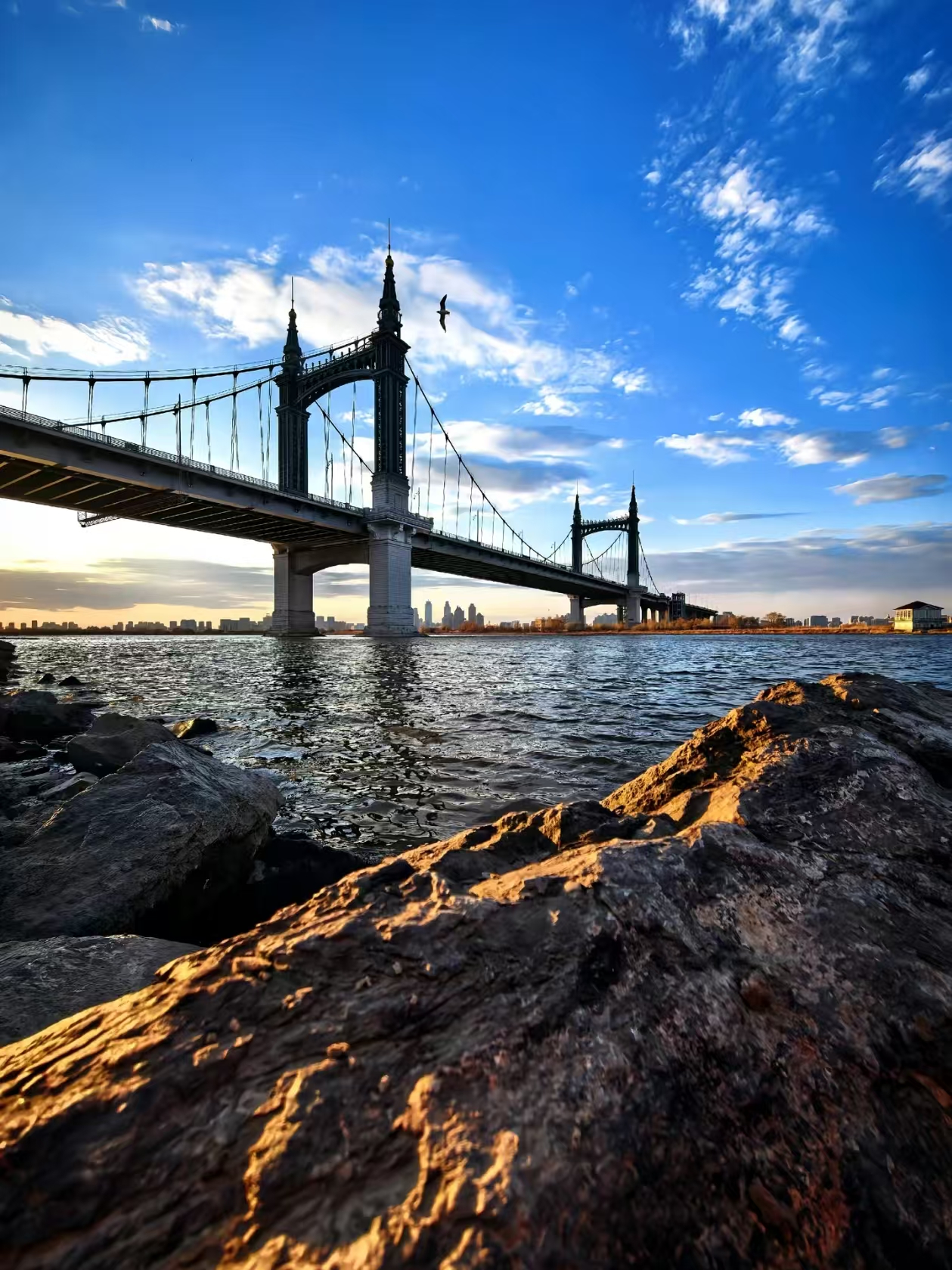
The Songhua River bridge on a winter day — the river freezes solid from December to March, and locals walk, skate and even drive on it.
This was actually one of my favorite spots in Harbin. The Songhua River freezes completely from December to March, and it becomes a giant public playground. You can walk across it, ride a horse-drawn sleigh, rent a sled or just stand in the middle and look up at the suspension bridge in the photo above. The bridge (officially the Binzhou Railway Bridge) is a historic structure from 1901. It's been converted into a pedestrian walkway and is one of the best places to take photos of the frozen river and the city skyline. Go at sunset for the best light.
Ignore the "black cabs" at the airport or train station. Anyone who approaches you saying "taxi, taxi, one more person" is a scam. They'll charge you 3x the DiDi price or take you to a shopping stop first. Use the official airport bus (20 RMB, runs every 20 minutes) or pre-book a DiDi. Also, Central Street restaurants are overpriced — walk 10 minutes into the side streets for authentic food at half the cost.
Food: Russian Meets Northeast Chinese
Harbin has the most distinctive food scene in northern China because of the Russian influence. You'll find things here that don't exist anywhere else in the country.
Guobao Rou (锅包肉)
Harbin's signature dish — pork slices battered and fried twice with a sweet and sour sauce. It's lighter, crispier and more refined than typical sweet and sour pork. The best version I had was at Lao Chang Chun Bing (a chain with multiple locations). The sauce should be thin and translucent, not thick and gloppy. Budget 40-60 RMB per portion.
Russian-Style Western Food
Borscht, beef stew, fried salmon, potato salad — the Russian influence runs deep. Huamei Western Restaurant on Central Street is the historic choice, but I actually preferred Portman's Restaurant (near the corner of Central and Xi Shi). Better service, less crowded, same quality. Expect 100-150 RMB per person.
Madiel Ice Cream (马迭尔冰棍)
5 RMB per stick, available everywhere on Central Street. The vanilla is the classic. Eat it at -20°C — the cold makes the texture denser and the flavor more pronounced. It's one of those things that sounds ridiculous and turns out to be wonderful. I ate three in one day. No regrets.
Tieguo Dun (铁锅炖)
Iron pot stew — pick your meat (pork ribs, chicken, or fish), add potatoes, corn, and a few handfuls of flatbread that bakes against the side of the pot. The whole thing is cooked on a wood fire at your table. It's the single best cold-weather meal I've ever had. Go to Shanhetun Tieguo Dun (several locations). Budget 60-80 RMB per person, and you will not finish everything.
Harbin has aggressive central heating. Every building, every shop, every bus and every restaurant is heated to about 22-24°C. You'll go from -25°C outside to +25°C inside in 10 seconds. The moment you walk inside, take off your coat, hat and gloves. If you don't, you'll sweat, then go back outside and freeze. The locals know this. You'll learn it after about two days.
4-Day Itinerary
Three to four days is ideal. Here's what I'd do if I had to do it again.
Day 1: Central Street → St. Sophia Cathedral → Songhua River ice. Walk the mile-long Russian pedestrian avenue. Cathedral entry is 20 RMB. On the frozen river, you can sled, skate or ride a horse-drawn cart. Budget 50-100 RMB for ice activities.
Day 2: Ice and Snow World (enter after 4pm). Main event: ice castles, giant slides, neon lights. Book tickets on Trip.com in advance. Limit your time to 3-4 hours max.
Day 3: Sun Island → Siberian Tiger Park → Old Daowai. Sun Island has the Snow Expo (30 RMB). The Tiger Park is genuinely wild — you can see tigers up close from a bus (110 RMB). Old Daowai is a preserved 1920s Chinese-Baroque district, much quieter than Central Street.
Day 4 (Optional): Yabuli Skiing → Hot springs. Yabuli is one of China's largest ski resorts. Book a full-day package through your hotel or Trip.com. Expect 300-500 RMB for ski pass + instructor. The hot springs afterward are non-negotiable.
December to February is peak ice season. Mid-January to early February has the most solid ice and best light shows. March is a compromise — the ice starts to melt but crowds are thinner and temperatures are slightly milder (-5°C to -10°C). I went in early March and still had a great time.