Shanghai Travel Guide 2026: What to Do, See and Eat
Shanghai is the city that surprises people who think they already know what China looks like. It's cosmopolitan in a way that feels genuinely earned — a place where art deco buildings sit beside futuristic towers, where French bakeries and Shanghainese noodle shops share the same block, and where the skyline at night is one of the most spectacular in the world.
Lujiazui: How to Actually Experience It
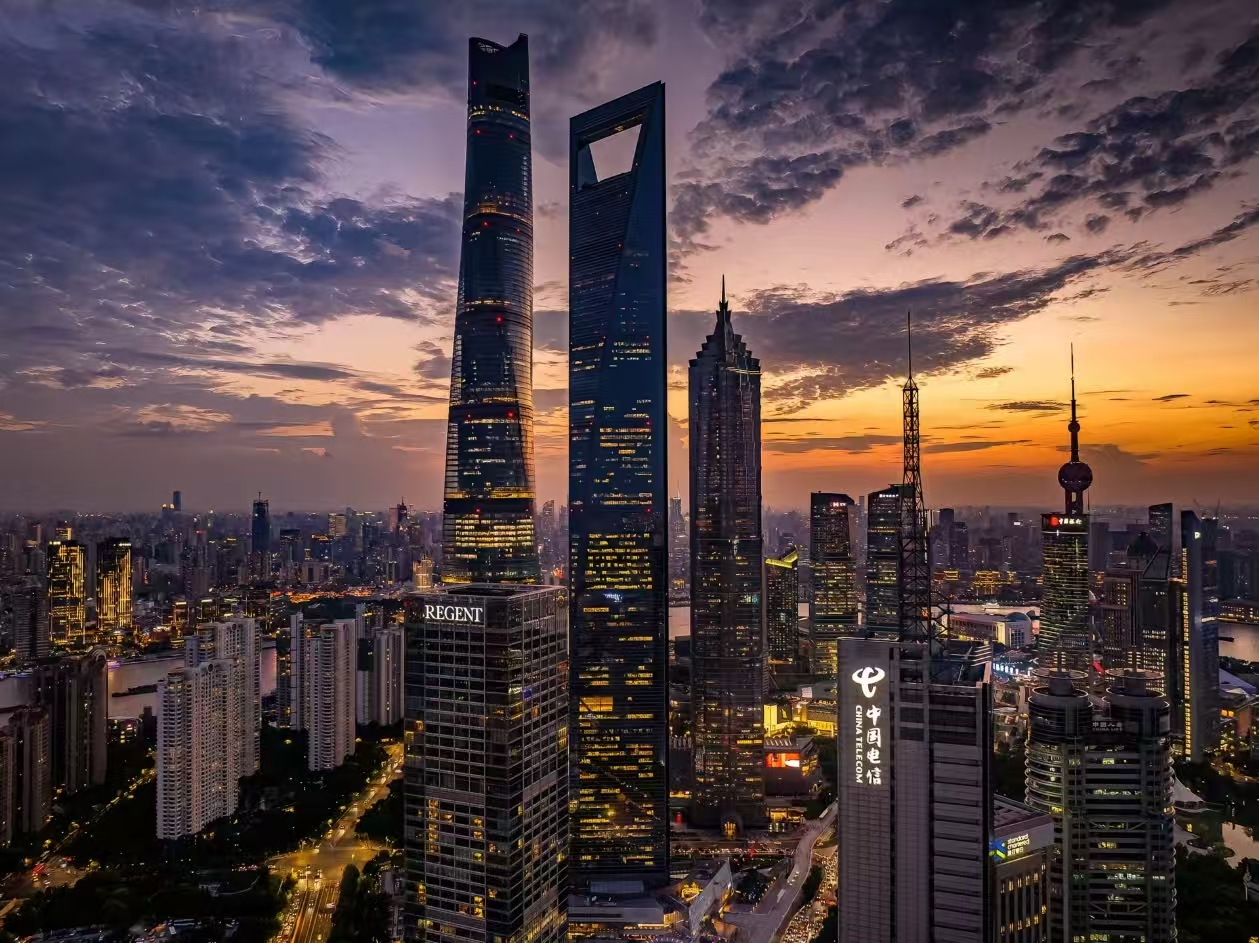
Every visitor to Shanghai ends up in Lujiazui — the financial district across the river from the Bund, home to the Shanghai Tower, the World Financial Center and the Jin Mao Tower standing together in a cluster that doesn't look real from certain angles.
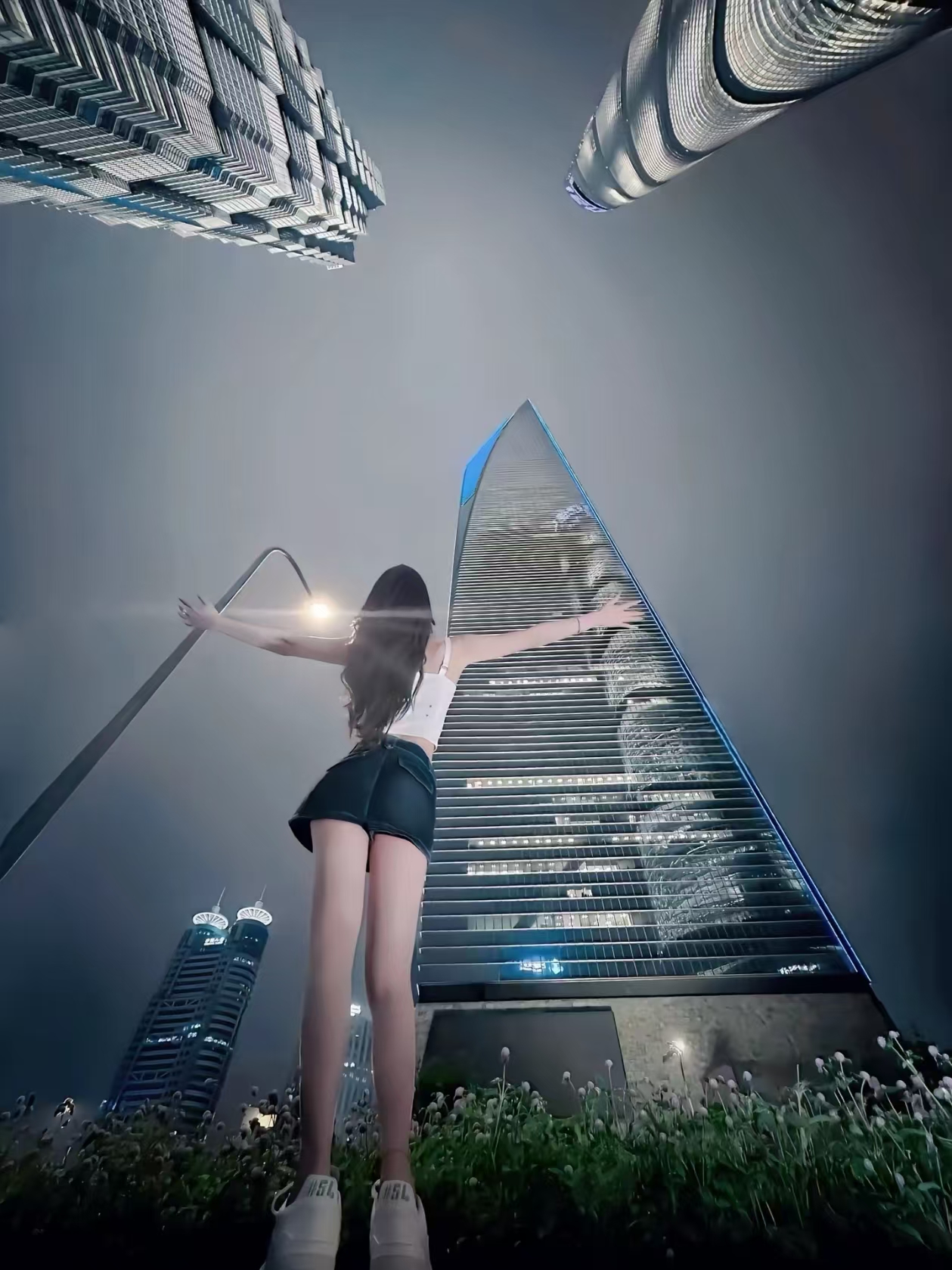
Looking straight up at the Lujiazui towers at night — one of Shanghai's best photo spots
The shot above is taken from the base of the towers, looking straight up. Find the small garden area between the Shanghai Tower and the World Financial Center, lie on your back or crouch low to the ground, and shoot upward. The buildings converge into something that looks almost impossible. Go after 9pm when the light shows are running — the colors are completely different from daytime.
The best angle is from the northeast corner of the Lujiazui ring road, close to the small circular park. Face southwest with all three towers behind you. The flower beds in the foreground add depth. Best after 9pm when the buildings light up.
The Bund at Night
The Bund is Shanghai's most famous view — a waterfront promenade lined with colonial-era buildings on one side, facing the Pudong skyline across the Huangpu River on the other. Most people do it wrong: they go in the afternoon when the light is flat and the crowds are thick. Come at night instead.
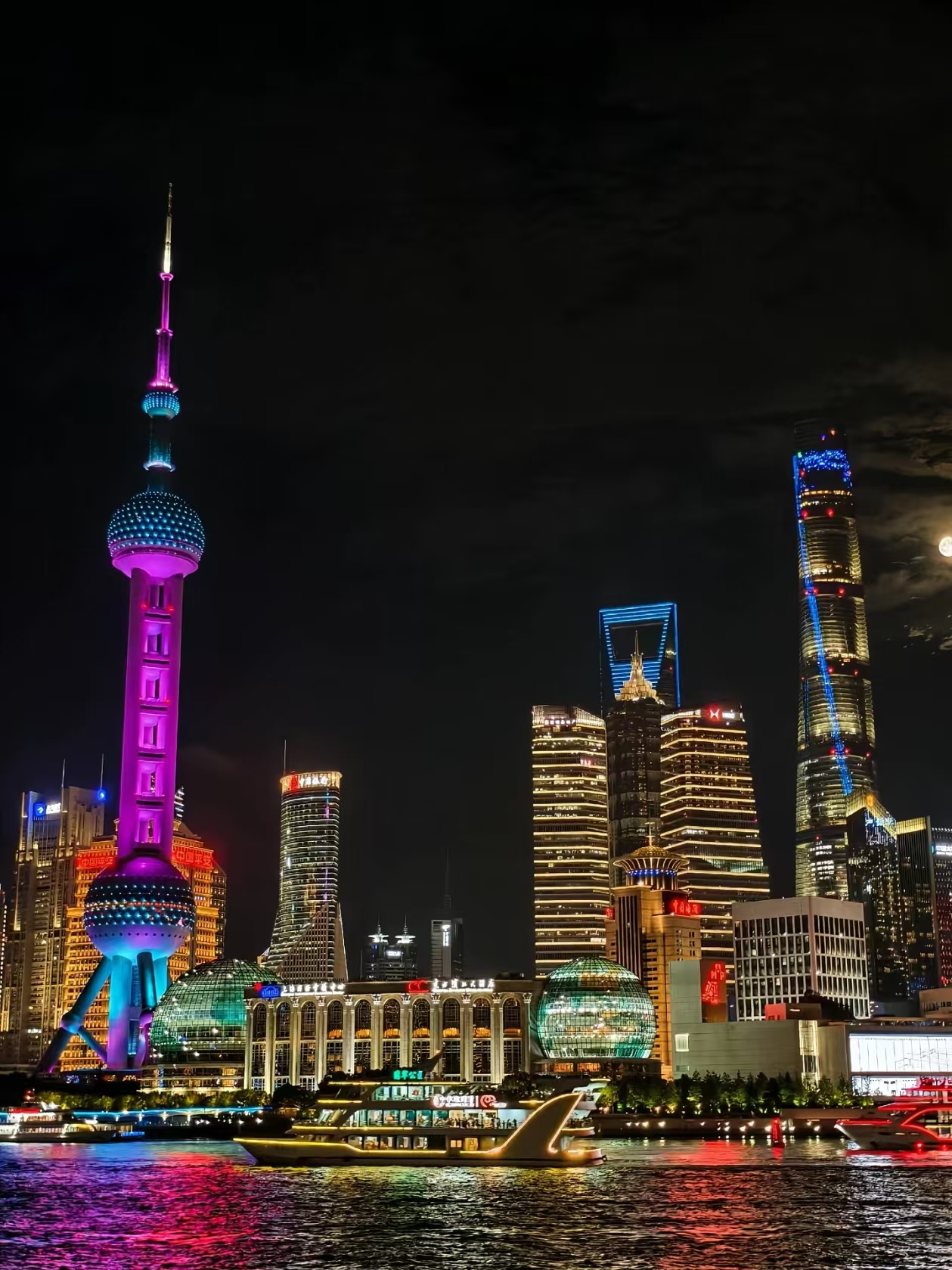
The Pudong skyline from the Bund — Oriental Pearl Tower and Shanghai Tower lit up at night
The light show runs from 8pm to 10pm daily. Every major building changes color every few minutes. Walk the full length of the Bund from Waibaidu Bridge south — it's about 1.5km — and stop whenever something catches your eye. The reflections on the river on a still night are extraordinary.
Shanghai Tower: Worth Going Up?
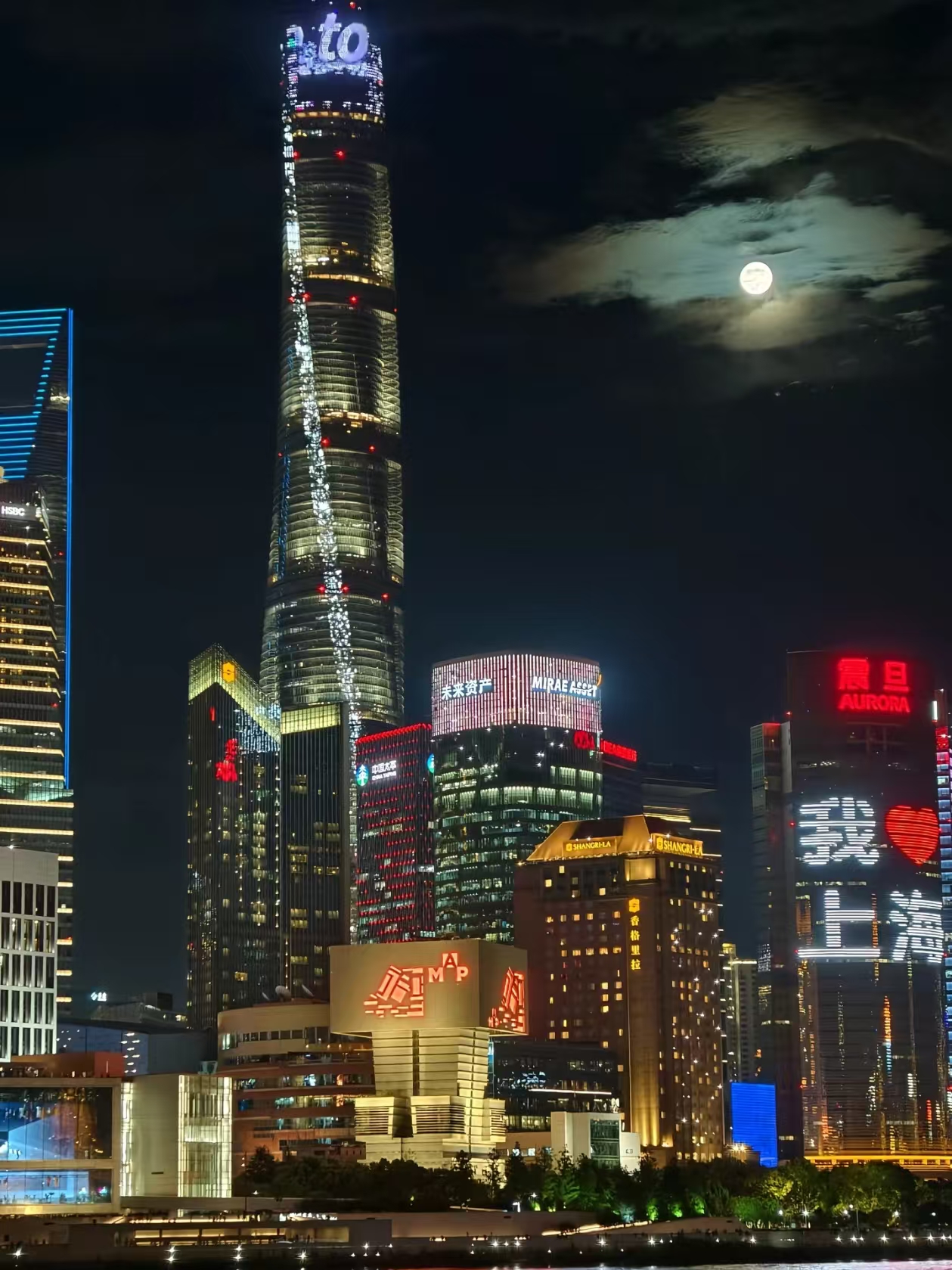
Shanghai Tower — at 632 meters, the tallest building in China
Short answer: yes, once. The Shanghai Tower observation deck is on the 118th floor at 546 meters — high enough that on a clear day you can see the curve of the earth. Tickets cost ¥180 and can be bought online in advance (recommended on weekends). The elevator takes 55 seconds to reach the top.
Go on a weekday morning for the clearest skies and smallest crowds. On hazy days the view is disappointing — check the air quality forecast before you go. The app "AQI China" gives real-time readings.
Shanghai Tower observation deck: open 10am–10pm daily. Tickets ¥180, book at shanghaitower.com.cn. Last entry 9pm. Take metro Line 2 to Lujiazui station, exit 6.
The French Concession
If Lujiazui is Shanghai showing off, the French Concession is Shanghai being itself. Tree-lined streets, 1920s apartment buildings with ornate facades, independent coffee shops in converted shophouses, vintage stores and some of the city's best restaurants packed into a walkable neighborhood.
Wukang Road is the most photographed street — the curved Normandie Apartments building at the junction appears in every Instagram post about Shanghai. Walk south from there through the backstreets: Anfu Road, Fumin Road, Changshu Road. Each block has something worth stopping for.
Food Worth Finding
Shanghainese food is sweeter and richer than most Chinese regional cuisines. Three things you should eat here:
Xiaolongbao (soup dumplings) — thin dough filled with pork and hot broth. Bite a small hole in the side first, drink the soup, then eat the rest. Nanxiang Steamed Bun Restaurant in the Old City has been making them since 1900. Expect a queue. Worth it.
Shengjian bao (pan-fried pork buns) — heavier, crispier cousin of the soup dumpling, fried on the bottom until golden. Available at breakfast shops across the city for around ¥12 for four. Look for the ones with a line of locals waiting.
Hairy crab — if you're visiting in autumn (October–November), hairy crab season is taken very seriously in Shanghai. The crabs are small, messy to eat and expensive, but the roe is unlike anything else. Most restaurants offer them steamed with Shaoxing wine and ginger.
Getting Around Shanghai
Shanghai's metro is one of the best urban rail systems in the world — fast, clean, cheap and covering almost everywhere you'll want to go. Fares start at ¥3. Download the Metro Daduhui app or use Alipay's transit function to pay without a physical card.
From Pudong Airport, the Maglev train reaches Longyang Road station in 8 minutes at 431 km/h — costs ¥50 and worth doing once just for the experience. From Hongqiao Airport, take Line 2 directly into the city center.
DiDi (China's ride-hailing app) works well in Shanghai and accepts foreign payment cards since 2024. Download it before you arrive and set it up while you still have reliable internet.
Best Time to Visit
Spring (March–May) and autumn (October–November) are the best seasons — mild temperatures, lower humidity, clearer skies. Summer is brutally hot and humid with frequent typhoons hitting in July and August. Winter is cold and damp but manageable, and the city is less crowded.
Shanghai is genuinely busy year-round. Golden Week holidays (first week of October, first week of May) bring enormous crowds from across China — avoid if you can, or book everything well in advance.